
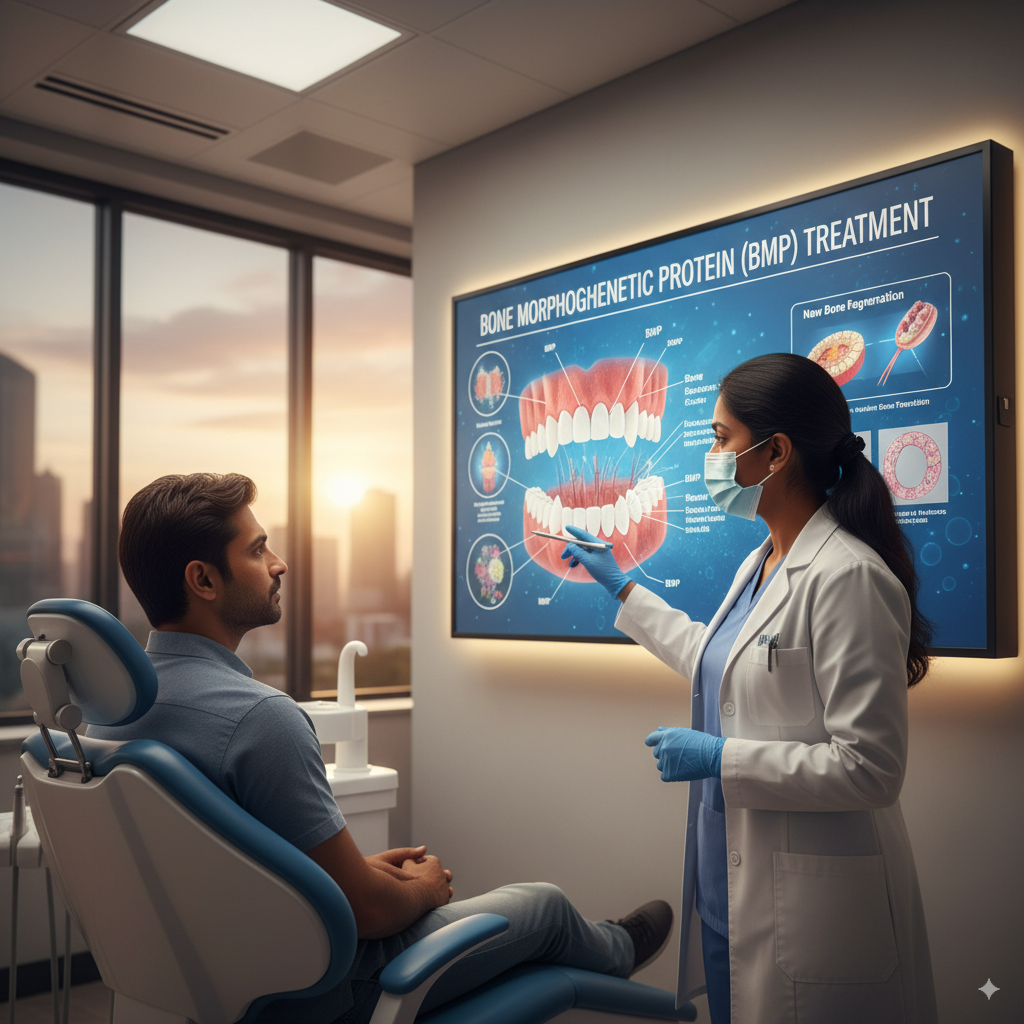
Bone Morphogenetic Protein (BMP) is a naturally occurring protein in the body that stimulates bone growth. In oral and maxillofacial surgery, BMP can be used to encourage new bone formation in patients who do not have enough natural bone to support dental implants or other reconstructive procedures.
Traditionally, bone grafting procedures required taking bone from another part of the patient’s body or using donor material. With BMP technology, surgeons can now stimulate the body’s own cells to form bone exactly where it is needed — eliminating the need for a second surgical site.
When is BMP Used?
-
Patients with insufficient bone in the jaw for dental implants
-
Reconstruction after trauma or tumor removal
-
Cases where traditional bone grafting is not possible or not preferred
How BMP Works:
BMP is placed at the surgical site with a carrier material (often a collagen sponge). Once in place, the protein activates the body’s natural healing response, encouraging stem cells to transform into bone-forming cells. Over time, this leads to the growth of strong, healthy bone capable of supporting implants or restoring facial structure.
Benefits of BMP in Oral Surgery:
-
Stimulates natural bone regeneration
-
Eliminates the need for harvesting bone from another site
-
Reduces surgical time and patient discomfort
-
Provides predictable and long-lasting results
At 32 Pearls – Dr. Sameer Kaura’s Dental & Maxillofacial Clinic, BMP technology is used in select cases to provide patients with advanced, minimally invasive solutions for bone regeneration. This innovation makes implant placement and jaw reconstruction possible for many patients who were previously not candidates for these procedures.